


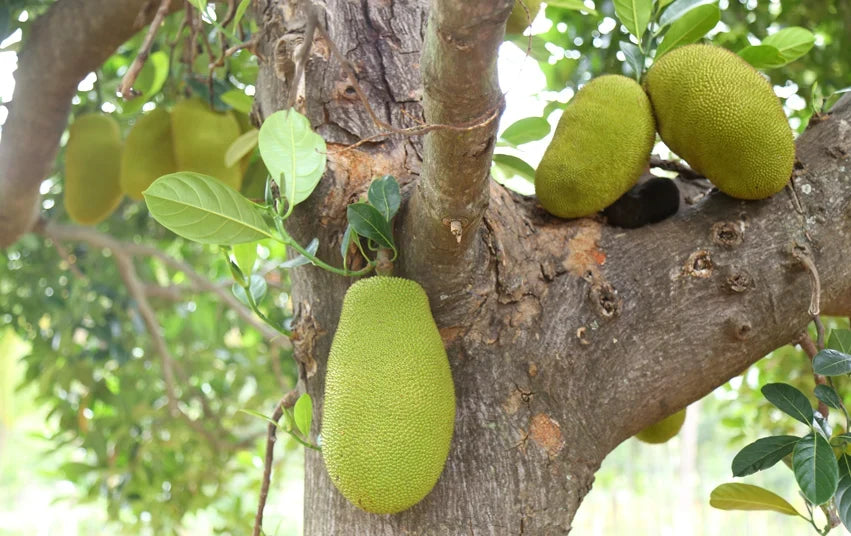
For all those who enjoy looking for new culinary inspiration or are looking for alternatives to meat, the jackfruit is certainly the discovery of the year. The world's largest tree fruit is, in terms of texture and consistency, hardly distinguishable from beef or chicken in its unripe form. Marinated and freshly fried or cooked, jackfruit is simply delicious. Currently, jackfruit is available on the market in two forms – as a canned product or as a preserved product packaged in a pouch. But how do the jackfruit from the can and the jackfruit from the pouch differ? This question is particularly relevant given the clear trend towards "zero waste": whether in the supermarket or at home, increasing importance is being attached to reducing packaging waste. On the other hand, packaging is necessary to protect food from external influences and keep the contents fresh. For this reason, it may be of particular interest to examine the different types of jackfruit packaging: comparing jackfruit from the can with jackfruit from the pouch, it is noticeable that the two types of packaging are quite comparable in terms of resource conservation: both the OPP pouch and the can use similar amounts of energy and resources during production, but also during recycling.
Clear advantage: Transport and logistics
One of the advantages of pouch packaging is its lower overall weight compared to the heavier tin can. In addition to the weight of the metal, canned vegetables are packed in brine or water – which further increases the overall weight of the product. Due to the lower weight of the individual jackfruit pouch, transporting the products is far more resource-efficient, which slightly improves the pouch's environmental footprint. At home, too, the pouch takes up less space than a can. Overall, less waste is produced.
Practical side effect: Opening
It goes without saying: the pouch is easier to open than the can – no can opener is required. The jackfruit in the pouch can also be stored in the refrigerator for 2-3 days after opening without any problems.
Unfortunately, the situation is different with cans: cans can release tin into the food after opening. Although many cans are lined on the inside, a can opener or fork could damage the coating. Furthermore, not every can has a protective coating - especially with canned fruit, many manufacturers still do not use one. As long as the can is closed, the lack of or damage to the coating is not a problem. However, after opening, the can should be emptied as quickly as possible.
Unadulterated taste and firm texture
With the jackfruit pouch, the taste and texture remain consistent from the time of packaging until consumption. Since the jackfruit is not packed in brine, it does not absorb the liquid, but instead has a rather dry consistency. This allows the marinade to be absorbed better by the fruit flesh during preparation – making the seasoning even more intense.
One disadvantage, however, is the color: since the jackfruit in the pouch is packaged completely without additives, a natural oxidation process leads to slight browning. However, this does not mean a loss of quality and is usually no longer noticeable after marinating or frying.
To preserve the jackfruit in the can, additives such as water, salt, and citric acid are often added. These acidifying agents can alter the taste of the jackfruit.
By the way: the shelf life of the pouch jackfruit is similar to that of the jackfruit from the can, as both foods are sterilized during production.
If it's a can, make it organic!
Canned jackfruit, which is offered cheaply in Asian markets, for example, is hardly available in organic quality. Unfortunately, it cannot be ruled out that the conventional version contains unwanted additives. Conventional jackfruit cultivation is also often carried out in monoculture, and pesticides may be used. For this reason, we recommend always choosing organic options.
Conclusion
Packaging cannot be avoided if you value long-lasting and safe food. Both options – both jackfruit from the OPP pouch and from the can – have some advantages and disadvantages. Those looking for a low-cost option and who want pure white jackfruit flesh will more likely choose the conventional tin can. However, those who prefer the firm consistency, unadulterated taste, and more resource-efficient packaging will probably choose the pouch. We can all hope that the development of alternative, biodegradable packaging materials will advance more quickly, allowing us to continue improving the packaging concept for jackfruit as well.


